
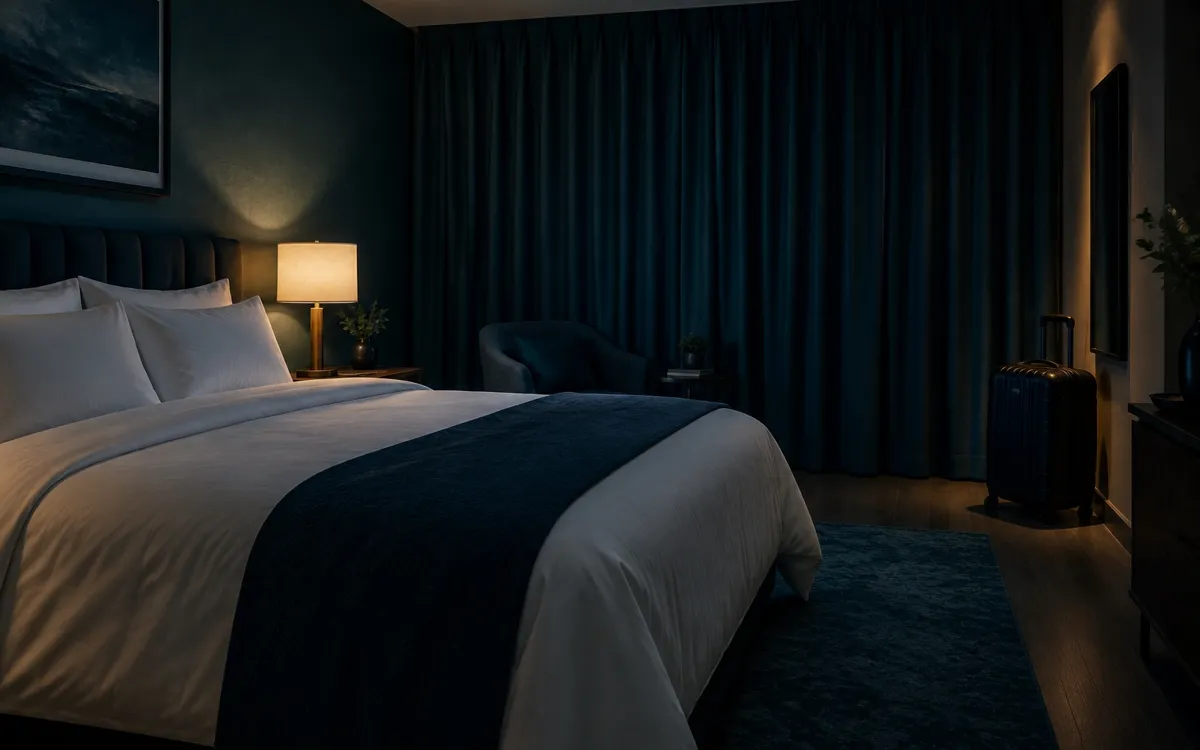
You have a comfortable bed, crisp sheets and nothing to do in the morning, yet you lie awake for hours. Poor sleep on the first night somewhere new is so common that researchers have a name for it: the first night effect. Part of your brain stays more alert in an unfamiliar place, listening out for anything unusual.
Bring a little of home with you
Familiar cues help your brain relax. That might be your own pillowcase, a favourite sleep story, or the same evening routine you follow at home. The more your bedtime feels like a normal night, the faster you settle.
Get the room right
- Turn the heating down. A cool room is easier to sleep in than a warm one
- Close the curtains fully and cover standby lights
- Ask for a room away from lifts, ice machines and the street if you can
- Use a steady soundscape to soften corridor and traffic noise
Ease the travel day
Long journeys, late meals and a glass of wine at the bar all make sleep lighter. Try to eat a couple of hours before bed, drink water, and give yourself twenty minutes to unwind in the room before you turn the light off.
Settle your mind
Travel often means a busy head: tomorrow's meeting, the flight home, the things left undone. A few minutes of slow breathing followed by a calm story gives your mind something to follow instead.
Look for hotels that think about sleep
More hotels now treat sleep as part of the stay, with blackout curtains, pillow menus and in-room audio for rest. Some properties in Scotland and beyond offer Tethered content through a QR code in the room, so you can listen without downloading anything.
The first night away is often the hardest. A familiar routine is the best thing you can pack.