
For years, the hotel room has been judged on the bed, the shower and the view. Those still matter, but guests are now asking a different question: will I actually rest here? Sleep has moved from a background expectation to a reason to book.
The size of the shift
Wellness tourism passed $1 trillion in 2024, according to the Global Wellness Institute. Within it, sleep tourism has become a category in its own right, valued at around $74.5bn in 2024 and forecast by Grand View Research to reach about $149bn by 2030. Hilton's 2024 Trends Report found that resting and recharging is now the top reason people travel, with more emphasis on sleep than Hilton had previously measured.
Wellness travellers are also valuable guests. International wellness travellers spend around 41% more per trip than typical international tourists.
The gap guests notice
Despite all this, only around one in three travellers say they are satisfied with their sleep while away. Most hotels have already invested in the physical side: better mattresses, blackout blinds, acoustic glazing, pillow menus. The part that remains is mental. A guest can lie in a perfect bed and still be awake at 2am thinking about tomorrow's meeting or the flight home.
Why it matters commercially
Sleep shows up in the numbers hotels care about. J.D. Power's 2019 North America Hotel Guest Satisfaction study found that guests who report better than expected sleep rate their whole stay 114 points higher on a 1,000 point scale. That lift affects review scores, repeat bookings and the price guests are willing to pay.
What a sleep offer looks like now
- Physical comfort: bed, temperature, light and noise
- A wind-down ritual: something to help guests switch off, not just switch the light off
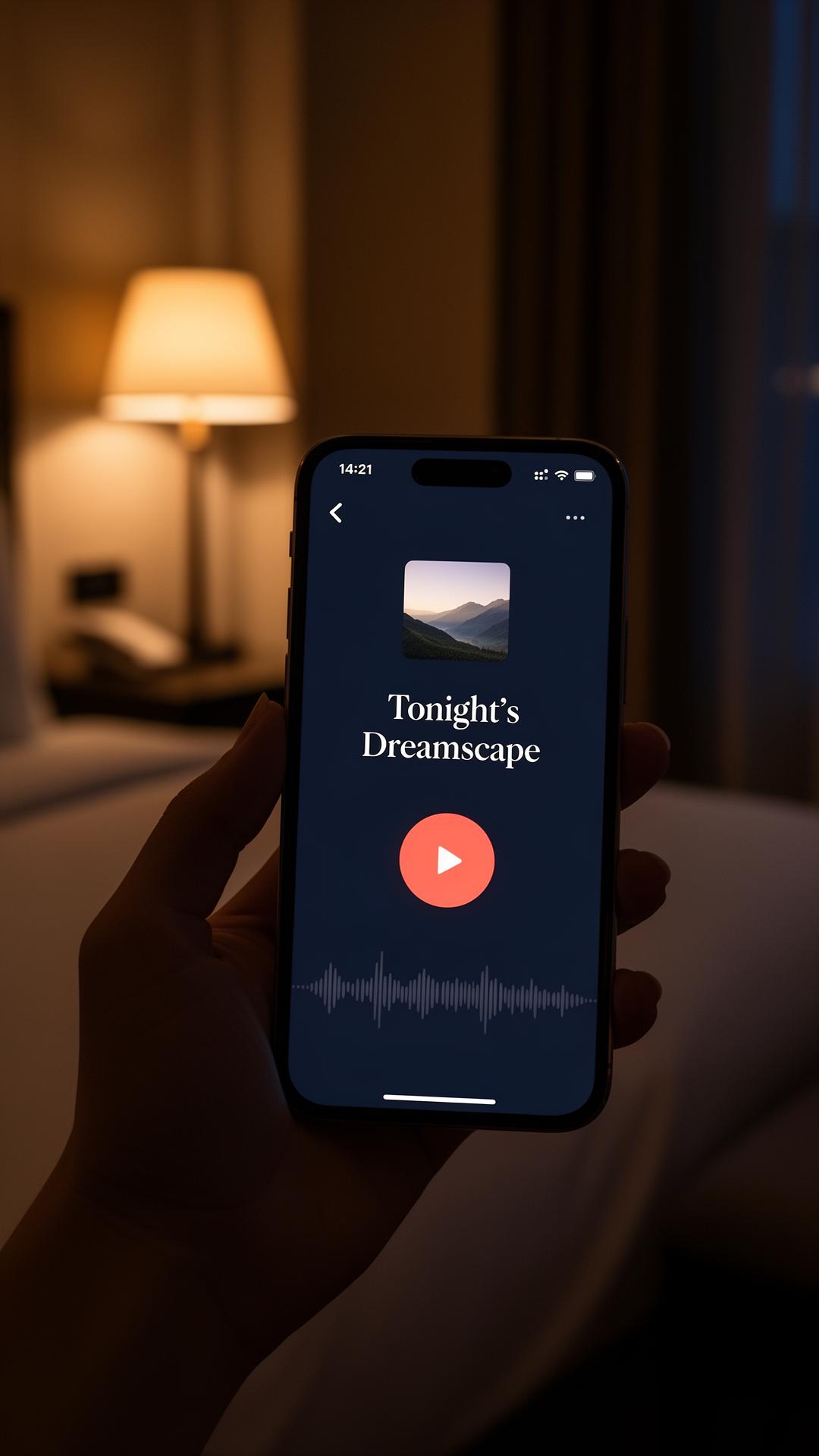
- Content guests can use in the room: sleep stories, soundscapes, breathwork and guided rest
- A sense of place: rest that feels connected to where the guest is, not generic spa music
That last point is where hotels can stand out. A guest who falls asleep to a story set on the shoreline outside their window remembers that stay differently from one who used a generic app they could get anywhere.
Where to start
Begin with what guests already tell you. Look at how often sleep, noise and rest appear in your reviews. Then think about the wind-down moment: what does a guest have to help them relax once they are in the room? For many properties, in-room audio is the simplest way to fill that gap without new building work or extra staff.